
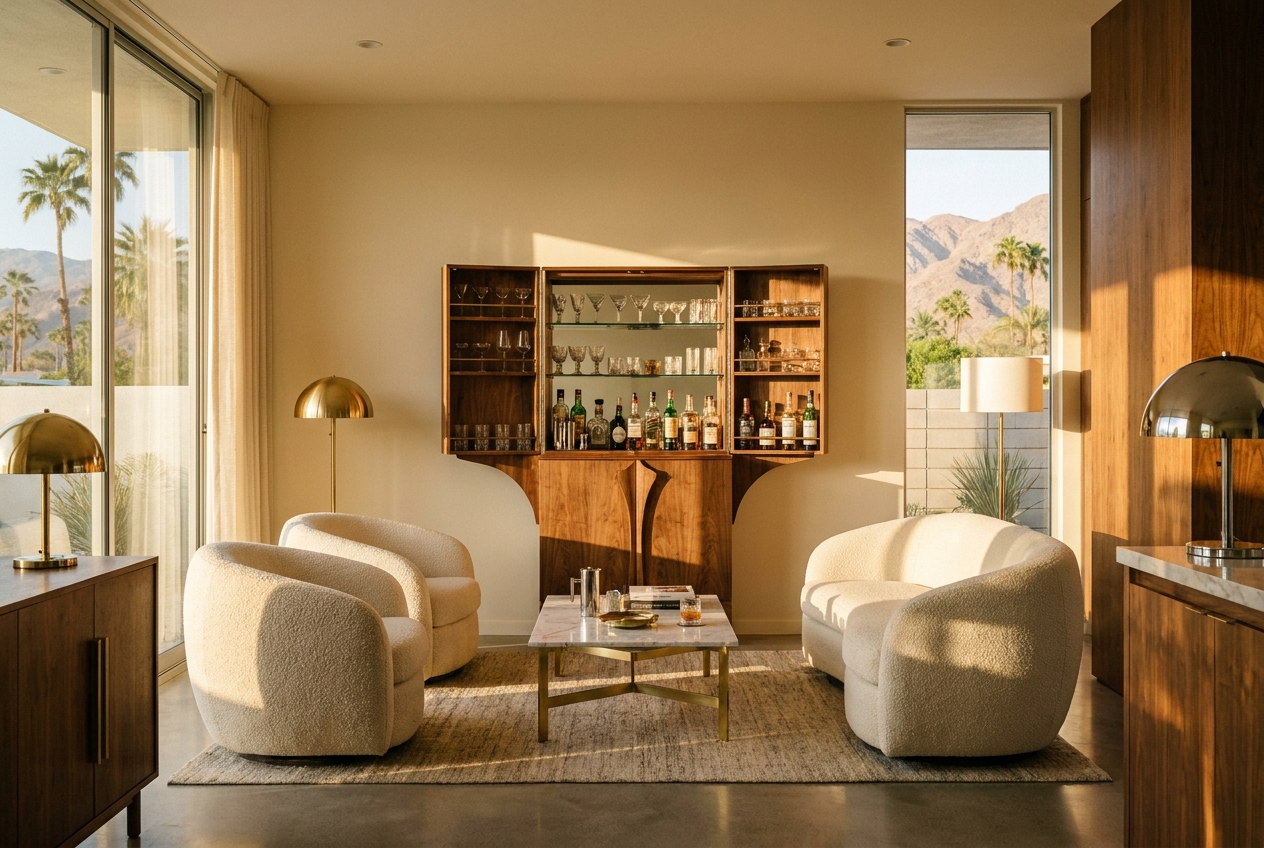
A room can change its register with a single gesture. In the best Mid-Century Modern interiors, that gesture is often a bar: not a stage set for entertaining, but a considered piece of furniture that brings architecture, ritual and conviviality into quiet alignment. A walnut cabinet, its grain warmed by late-afternoon light, can lend a living room the ease of a Palm Springs hotel without asking it to become one.
The MCM bar is at its most compelling when proportion leads. Look for a grounded silhouette, clean planes and enough visual weight to balance a low sofa or a broad expanse of glazing. Walnut remains a natural choice because its depth softens the period’s disciplined geometry. A gently rounded edge or tapered leg keeps the composition from feeling rigid; a restrained chrome or brass detail supplies the glint. The result recalls Atomic Era optimism while remaining entirely at home in a contemporary space.
Begin with placement, not accessories. A bar cabinet can define the transition between sitting and dining areas, or occupy an alcove that deserves a purpose. Give it breathing room and consider the view from the room’s main entrance. A mirror, a piece of graphic art or a sculptural lamp may complete the backdrop, but restraint matters. The cabinet should read as furniture first, not as a crowded display.
Then edit the objects. A small, useful collection of glassware, a handsome tray and one memorable vessel create a more polished impression than shelves filled to capacity. Let negative space do some of the work. If the cabinet has an open shelf, vary heights and materials with intention: clear glass against dark walnut, perhaps, or a muted ceramic beside a chrome accent. These contrasts give the arrangement rhythm without tipping into themed nostalgia.
Comfort is the other half of the composition. Pair the bar with a conversation area whose seats invite people to settle in rather than simply admire the room. Curved upholstery, a compact cocktail table and a warm pool of light make the evening feel natural. This is where Mid-Century Modern design proves its enduring intelligence: beauty is not separated from use; it is built around it.
For a more collected result, mix eras rather than reproducing a single decade. An Art Deco object can sharpen the geometry, while an Industrial-Luxe metal accent introduces a cooler note. Keep the palette coherent, allowing walnut, ivory and brushed metal to repeat across the room. Explore the pieces in The Gallery, then use The Design Studio to shape a setting that feels personal rather than prescribed.
A well-composed cocktail corner is ultimately an invitation. It carries the optimistic spirit of MCM into everyday life: a place to pause, pour something lovely and let the room do what good design has always done best, bring people together.